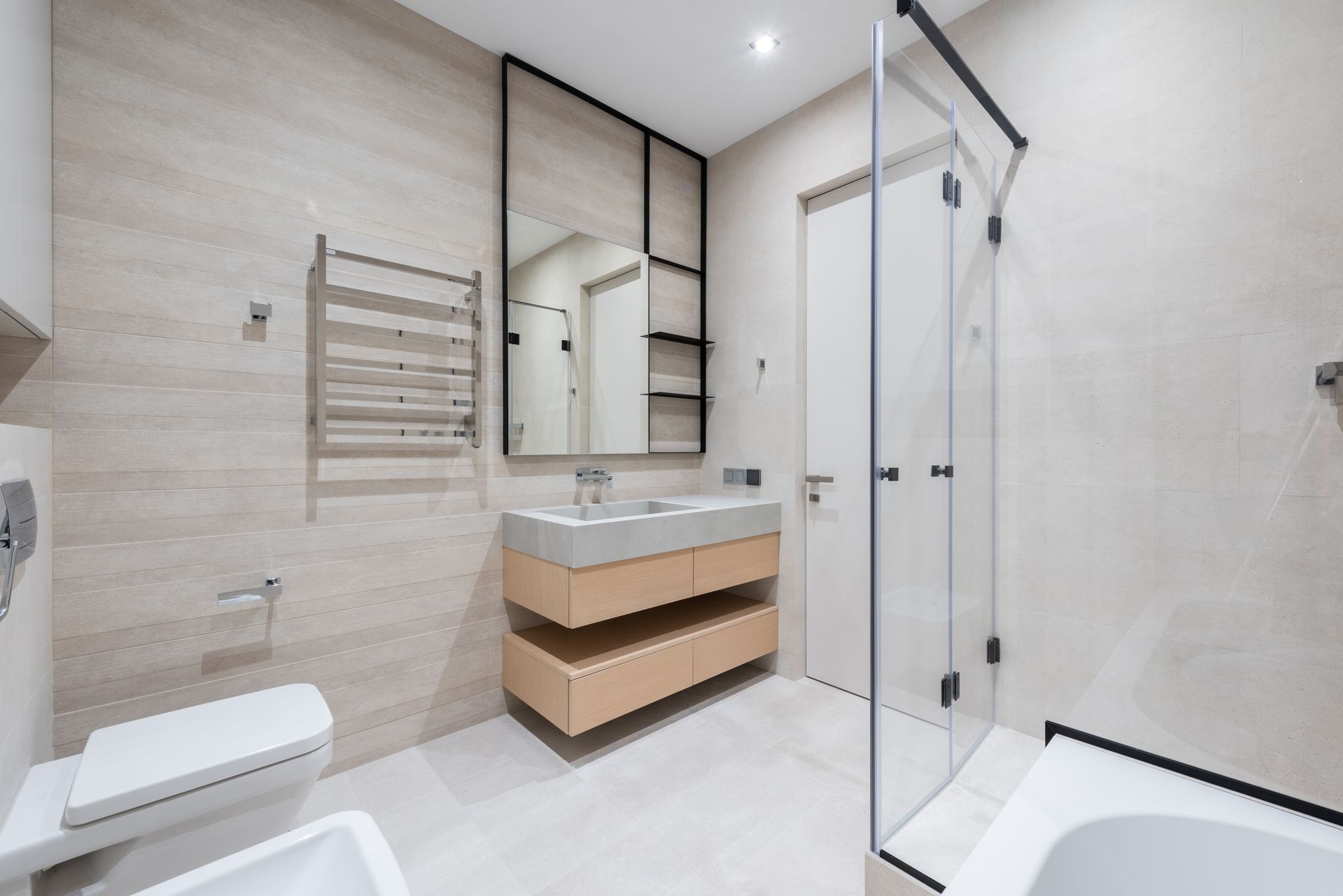
TL;DR: Frameless shower screens don’t leak because they lack a frame. Leaks almost always come down to installation quality, showerhead position, worn silicone, or waterproofing underneath the tiles. Done properly, a frameless screen is just as watertight as a framed one, with a sleeker look and easier cleaning in exchange for a higher price tag.
Frameless shower screens have become the go-to choice for Melbourne bathroom renovations, and for good reason. They open up a small ensuite, showcase feature tiles, and skip the grubby metal edges that framed screens collect over time.
But before committing, most homeowners ask the same question: do frameless shower screens leak? The short answer is no, not because they’re frameless, but poor installation, the wrong showerhead angle, or ageing silicone can let water escape from any screen type. Our team of Glaziers in Diamond Creek gets asked about this constantly, so here’s a straight answer on the leaks, plus the genuine pros and cons.
In This Article
Do Frameless Shower Screens Leak?
What Causes a Frameless Shower Screen to Leak
The Pros of Frameless Shower Screens
The Cons of Frameless Shower Screens
Frameless vs Semi-Frameless: Which Leaks Less?
How to Prevent a Frameless Shower Screen From Leaking
Frequently Asked Questions
Getting a Leaking or Damaged Frameless Screen Sorted
In This Article
- Frameless shower screens are no more prone to leaking than framed screens when fitted correctly.
- Most leaks trace back to installation errors, showerhead direction, or failed silicone, not the glass itself.
- Australian Standards set a minimum toughened glass thickness for frameless screens to keep them safe and structurally sound.
- Frameless screens win on looks and cleaning ease, but cost more and demand precise installation.
- Semi-frameless screens offer a middle ground between price and the frameless look.
- Simple habits like squeegeeing after every shower and checking the seals twice a year keep a frameless screen watertight for years.
Do Frameless Shower Screens Leak?
A frameless shower screen does not leak simply because it has no frame. Watertightness depends on the glass thickness, the quality of the silicone seal, and how precisely the panel was fitted, not on whether a metal frame is present. When a frameless screen does let water through, the cause is almost always something that can be fixed rather than a fault in the design itself.
This is a common misconception because a frame does visually suggest containment. In reality, a frame simply hides small gaps rather than sealing them any better than a well-installed frameless panel does. Plenty of framed screens leak too, usually from the same causes covered below.
What Causes a Frameless Shower Screen to Leak
Leaks in frameless shower screens come from a handful of predictable sources. Once you know what to check, most issues are simple to diagnose and often just as simple to fix.
Poor Installation and Panel Alignment
If a panel isn’t hung level or the gap between the glass and the wall or floor is uneven, water finds the widest point and escapes. This is the single most common cause of leaks reported to glaziers, and it’s why frameless screens should always be measured and fitted by an experienced installer rather than adjusted after the fact.
Showerhead Position and Water Pressure
A showerhead angled directly at the glass edge, rather than back toward the wall, pushes water straight at the join. Repositioning the showerhead or fitting one with a softer spray pattern often solves what looks like a structural leak.
Worn or Missing Silicone Seals
Silicone breaks down over time from heat, moisture, and cleaning products. Once it cracks, shrinks, or lifts away from the glass, water works its way through the gap. Silicone is a maintenance item, not a one-off fix, and it typically needs replacing every few years.
Inadequate Waterproofing Beneath the Tiles
Waterproofing membrane sits under the tiles and floor, not at the screen itself, but it’s often the real source of water appearing outside the shower.
According to the Housing Industry Association (HIA), Australian Standard AS 3740 sets out the minimum waterproofing requirements for domestic wet areas, and enclosed shower areas are classed as high risk. If water is appearing at the base of a screen that’s otherwise well installed, the membrane beneath the tiles is worth checking before blaming the glass.
The Pros of Frameless Shower Screens
- Sleek, modern look. No visible metal framing means clean sightlines and a bathroom that feels larger and brighter.
- Easier to clean. Fewer tracks, hinges, and frame edges means less soap scum and mould buildup to scrub.
- Highlights the bathroom. With nothing to obstruct the view, feature tiles, fittings, and finishes stand out.
- Long-lasting glass. Frameless screens use thick toughened safety glass, built to withstand daily use for years.
- Flexible configurations. Frameless panels suit awkward layouts, corner showers, and custom shapes that framed kits often can’t.
The Cons of Frameless Shower Screens
- Higher cost. Thicker glass, precision hardware, and specialist installation push the price above framed or semi-frameless options.
- Installation sensitivity. Because there’s no frame to disguise a slightly uneven fit, frameless screens leave far less margin for error during installation.
- Repairs mean panel replacement. A cracked or chipped frameless panel usually needs to be replaced as a whole piece of glass rather than patched.
- Weight considerations. The thicker glass required for structural strength is heavier, which affects hinge and bracket selection.
Frameless vs Semi-Frameless: Which Leaks Less?
Neither style leaks more than the other by design. A semi-frameless screen adds a slim aluminium frame around the perimeter, which can make gaps slightly more forgiving during installation, but the actual water seal still comes down to the same silicone and glass-to-wall fit as a fully frameless screen. The choice between the two generally comes down to budget and aesthetic preference rather than leak resistance.
Toughened glass thickness is where the two styles differ most under Australian Standards. According to the NSW Government, the minimum thickness for framed toughened glass is 4mm, while partly framed and frameless toughened glass must be at least 6mm under AS 1288. The extra thickness compensates for the lack of a supporting frame, which is part of why frameless screens use heavier, more expensive glass.
How to Prevent a Frameless Shower Screen From Leaking
- Squeegee the glass and wipe the base track after every shower to stop water and residue building up at the seal.
- Check the silicone seal every six months and reseal at the first sign of cracking, discolouration, or lifting.
- Point the showerhead back toward the wall, away from the glass edge or the opening where the panel meets the wall.
- Have the panel alignment checked if the screen has shifted, doesn’t close flush, or has been knocked recently.
- Use a licensed glazier for any reseal or adjustment work rather than attempting a DIY fix on toughened glass fittings.
“The glass itself is rarely the problem. When we’re called out to a leaking frameless screen, nine times out of ten it’s the silicone or the fit, not the panel. Getting the install right the first time saves a lot of grief down the track.”
– Ryan, Eltham Glass
Frequently Asked Questions
Are frameless shower screens more likely to leak than framed screens?
No. Leak risk comes down to installation quality, silicone condition, and showerhead position, not whether the screen has a frame.
What glass thickness is required for a frameless shower screen?
Under AS 1288, frameless and partly framed toughened glass must be a minimum of 6mm thick, compared with 4mm for framed toughened glass.
Can a cracked frameless shower screen panel be repaired instead of replaced?
Toughened glass can’t be safely repaired once cracked or chipped. The panel needs to be replaced with a new piece of glass cut to match.
How often should the silicone on a frameless shower screen be replaced?
Most silicone seals last two to five years depending on use and cleaning habits, and should be replaced as soon as cracking or discolouration appears.
Is water outside my shower always a sign of a leak?
Not necessarily. Splashback from an angled showerhead can look like a leak. Check the showerhead direction before assuming the screen or seal has failed.
Getting a Leaking or Damaged Frameless Screen Sorted
A leak isn’t a reason to write off a frameless shower screen, and in most cases it’s a straightforward fix once the actual cause is identified. Whether it’s a worn seal, a misaligned panel, or a crack that needs a full replacement, sorting it early stops a small issue turning into water damage.
If you’re dealing with a damaged or leaking frameless panel in Diamond Creek or the surrounding suburbs, get in touch with Eltham Glass for a free quote on a replacement panel fitted to your exact specifications.